Product recommendations, cart recovery and automated multichannel workflows — just ten years ago, these marketing tools were firmly associated with retail. Today they’re used by most B2C businesses: clinics, travel agencies, real estate developers, fintech and edtech companies. The tools themselves have changed, and so has the way they’re adopted. Marketers have gone from manual segmentation to automation and hyper-personalization — individual connections with millions of customers. REES46 CEO Mikhail Kechinov talks about why personalization matters so much in modern marketing, why you can’t rely on AI blindly, and which online sales trends will define the coming decades.
CNews: How did your journey in marketing automation begin?
Mikhail Kechinov: You could say our journey as a company began in 2006. Back then, my team and I were building complex web projects. Over time we gained a lot of experience across many tech-related fields: personalization, e-commerce, edtech. Alongside client work, we launched our own projects. Some took off, others didn’t. At the end of 2013, we decided to launch a recommendation engine for online stores. We built a product recommendation algorithm first and tested it with one of our clients. It lifted revenue by 18%. That’s when we started building a product recommendation platform around that algorithm.
For the first two years, we didn’t treat marketing automation as a separate line of business. In 2016, we raised a million-dollar investment round to expand sales outside Russia. That’s how we started selling our solution to companies in Turkey and France.
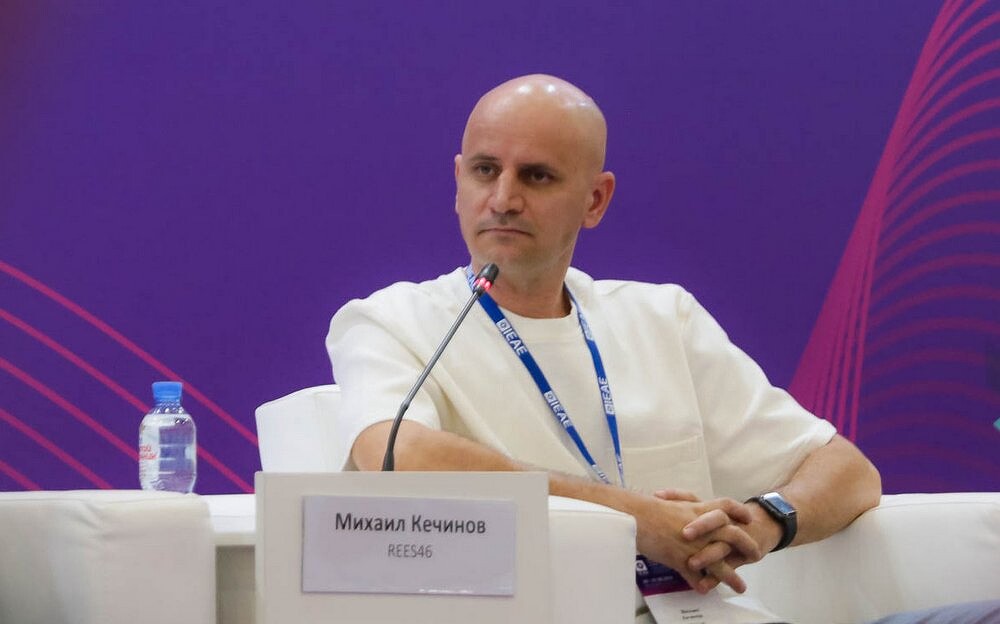
Mikhail Kechinov, REES46: “What’s already happening — thanks in no small part to artificial intelligence — is the hyper-personalization of customer experience and marketing.”
CNews: Which companies need marketing automation?
Mikhail Kechinov: Our view is that anyone who sells online needs these tools. Originally, marketing automation was only available to large companies that could afford personalization and big data analytics. We wanted to make these tools available to smaller businesses without large datasets or budgets for experimentation. They need it as well, because it works for them too. So we developed a technology that doesn’t need big data to start generating extra revenue for a small client. It worked from day one; it didn’t need months of training on existing data. It made money right away.
And of course, our tools were originally designed for retail only. Product recommendations or product search are no use to a bank, a clinic, or a café with 20 items on the menu. But over time, we added tools that are useful beyond retail — communications, for example: email, analytics, data processing, surveys and so on. A bank may well need RFM segmentation, and a private multi-specialty clinic may need Net Promoter Score. Because competition is growing in every industry, and the fight for customers there is now just as tough as in retail. Today we work with banks, insurers, travel agencies and healthcare providers — anyone who needs data processing and communication automation.
CNews: Are there companies that don’t use automation tools at all?
Mikhail Kechinov: The Russian market is quite dynamic. Companies that would rather do things by hand than automate are few and far between. Still, you’ll find them even among the big players. It’s not so much fear of a data breach — for companies with strict data security requirements there are on-premises solutions, and we offer one too. It’s that companies in no hurry to automate believe a human expert will pick products better. Our competitors’ mistakes don’t help: first they talk up ultra-precise AI personalization, and then in May they start recommending snow tubes on the homepage. Mistakes like that destroy trust in the technology — clients start to think personalization is a “black box.” We then have to spend a long time convincing them that a well-built platform lets you configure that black box for your own needs and control how its algorithms work — for example, by setting seasonality for every single item in the product feed.
CNews: So can you rely on machine learning and AI?
Mikhail Kechinov: Yes — and that’s exactly what control is about. You can and should use new technologies, but you need to keep them in check and be able to set your own display rules. In other words, you can use a model that picks the most relevant products for a visitor, but you should also be able to add rules on top that make the recommendations more accurate.
Right now we’re experimenting with an AI-powered personal shopping assistant that helps customers choose the right product. We’re talking about complex products, of course — things you don’t buy every day and whose specs can be hard to figure out on your own. Say you need a water heater. The assistant asks questions: the size of the bathroom, the number of people, the type of building, and so on. The visitor answers, and the assistant picks matching products from the store’s product feed — ones that are in stock in the customer’s city. So instead of a hundred options, there are just two or three to choose from.
Of course AI will make mistakes — but so do sales associates. That’s not the main issue with AI tools. What matters more is being able to boost high-margin products or your own private label. Because that’s how business works. If AI chooses on its own what to show for “smartphone,” it’ll obviously go with the iPhone 15, because it’s at the top of the popularity charts. But the highest-margin item in the store might be an Android phone from another well-known brand. That’s the one you need to push to the top — and that’s not something you can leave to AI if you want to make a profit rather than grow volume at zero margin.
CNews: Can you walk us through one tool and the features and settings that matter for e-commerce?
Mikhail Kechinov: Take on-site search. It’s an essential part of any website or online store, and expectations for it have changed a lot recently. Search — both fast and comprehensive — is now a marketing automation tool in its own right. Category listing settings on our platform let you push the highest-margin products higher in the results. But each user’s personal criteria remain the key factor.
Imagine a shopper from Novosibirsk who wears size 42 shoes visits an online shoe store — we know their size from previous purchases. Good search will show them the highest-margin products in their size that are available in their city. Because if we show them a gorgeous, high-margin pair in size 37 — or the same shoes in 42 but without delivery to Novosibirsk — they’ll most likely leave for another site. So the ranking logic goes: “Relevant (by size, location, season, budget)” → “High-margin” → everything else.
Historical webinar reference — September 17, 2024. The interview directed readers to a webinar on additional search features for online stores. View the original event page.
CNews: What sets your solution apart from competitors?
Mikhail Kechinov: I think our biggest advantage is that we set out to build a slightly different product from the start. We wanted to make marketing automation and personalized messaging accessible to companies that could not afford custom development, an in-house IT team, or several separate tools. Having every tool on one platform delivers results faster and cheaper. You don’t have to spend months implementing different services — everything already works in one place. That’s especially important for small and mid-sized businesses that can’t afford to spend months on problems; they need results fast.
We wanted businesses to get started quickly and choose only the tools they needed. So the goal was to make the platform intuitive to manage, allow flexible configuration of every tool, and — most importantly — provide transparent analytics. Our clients are often surprised that they can export any analytics at any time: how much revenue each tool generated, how that compares with last year or yesterday, how many orders, the average order value. With REES46, you don’t have to request this data from an account manager and wait your turn. You set up the report yourself — for any tool, for any period — and download it in whatever format suits you. Everything is transparent.
Long story short, we quickly found out that integrating our solution does take resources after all. CMS plugins on our clients’ sites can’t automate the entire setup. Each client integration still requires manual work, so the product isn’t as self-service as we’d originally imagined. But the ease of use, the range of tools and the transparent analytics we built into the platform turned out to be our biggest competitive advantage.
CNews: How much has your toolkit changed over the years? Are there tools that have become obsolete, or bring in far less revenue than before?
Mikhail Kechinov: Actually, no tool has really outlived its usefulness — how well each one works depends heavily on the industry, shopper behavior and even the region. For example, Russian companies often consider web push ineffective, while in Kazakhstan it delivers fairly high conversion. Bulk SMS has become less cost-effective as prices have gone up, but that doesn’t mean companies have abandoned it. Sellers now try to reach customers through other channels first — email, web push, Telegram — and send an SMS only if none of those were opened. The toolkit keeps growing: product boosting, triggered flows, Stories. And now even small companies build unified digital customer profiles in a Customer Data Platform — think of it as a CRM for B2C. The main trend is to use as many tools as possible to build personalized, multichannel communication strategies. One of our clients, the major Kazakh retailer Technodom, not only uses all our tools but is also the first to test our new features, like Stories on its website and app. We’ve written up a big case study on the full ecosystem of marketing automation tools.
CNews: What other trends do you see in the market? How will marketing automation change in the near future?
Mikhail Kechinov: What’s already happening — thanks in no small part to artificial intelligence — is the hyper-personalization of customer experience and marketing. Right now, user data is collected into a unified CDP profile based only on the customer’s previous activity on the site: what they bought, in which city, at what price, for which family members, and how often. That’s exactly the information that lets us create and send personalized triggered messages like “Is your dog running out of food? Want to reorder?” In the future, AI will let us not only draw on a customer’s history with a particular store, but predict their expectations. I think that’s the direction we’re heading in.
Bio

Mikhail Kechinov, CEO of REES46. Engineer and serial entrepreneur. Founder and driving force behind the HackDay hackathons; as head of an IT team, he has worked on more than 70 projects. In 2013, Mikhail founded REES46, which develops marketing automation solutions. REES46 is a resident of the Skolkovo innovation fund.